
We will match the cleaner to your ink, anilox and washer, and send a sample to test before you buy.
CBG Acciai · ABC International · REMWASH own brand · Selected CBG cleaners: ISEGA, Dermatest, BG ETEM documentation
FLEXO · step-by-step selection
Choose a cleaner for flexographic printing
Choose a component. The next questions adapt to your answers.
The interactive selector requires JavaScript. Applications and product comparisons are also available in the text below.
Unsure of the material or cannot find your method?
Check the anilox surface and ink type; photopolymer plates have a separate route. For spray washers, the machine model is needed.
Know the name? Find your product
- Brass brush
- Flex Wash Solvent
- Flex Wash Sonic
- Flex Wash UV
- Flex Wash UVM
- Flexo Wash V
- Greenklean Acqua
- Greenklean Acqua+
- Greenklean Profondo
- horsehair brush
- Inklean Daily
- Inklean Universale
- Micro sponges
- PoliClean
- REMWASH AQUA — ready-to-use
- REMWASH AQUA SC — concentrate
- SHB UV Wash
- Soft nylon brush
- Stainless steel brush
- Stainless steel brush in a wooden block
- Xtra Flex Wash SC
Featured cleaners for flexographic printing
See what each cleaner removes, how to prepare it and when to choose it.
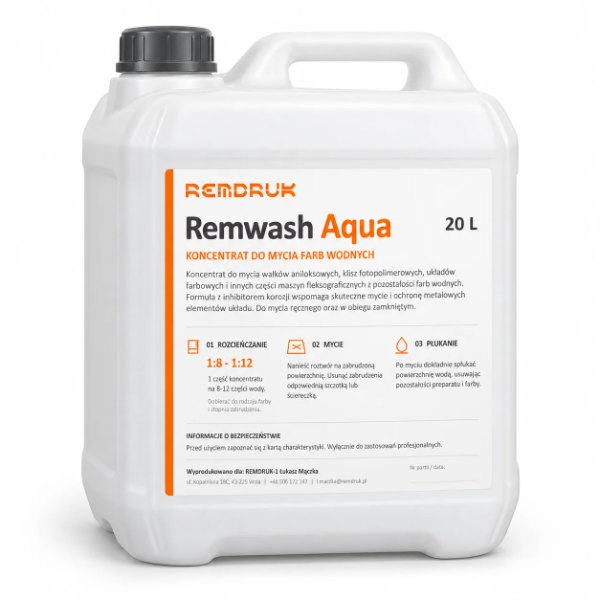
Concentrate · water-based inks and coatings · REMDRUK own brand
REMWASH AQUA SC
- Choose it when:
- you clean anilox rolls, chambers or aluminium parts — the corrosion inhibitor protects the metal.
- Suitable for:
- Anilox rollers and circuits after water-based inks and coatings; photopolymers after water-based inks, manually or in a plate washer.
- Dilution:
- 1:8–1:12; lighter deposits: trial at 1:15–1:20.
- Material and rinsing:
- Aluminium-compatible, with corrosion inhibitors. Rinse thoroughly after cleaning.
REMWASH AQUA SC in food-packaging production
REMWASH AQUA SC can be used to clean machinery and components in food-packaging production. Rinse product residues off with water to prevent transfer to the packaging and the food it contains.
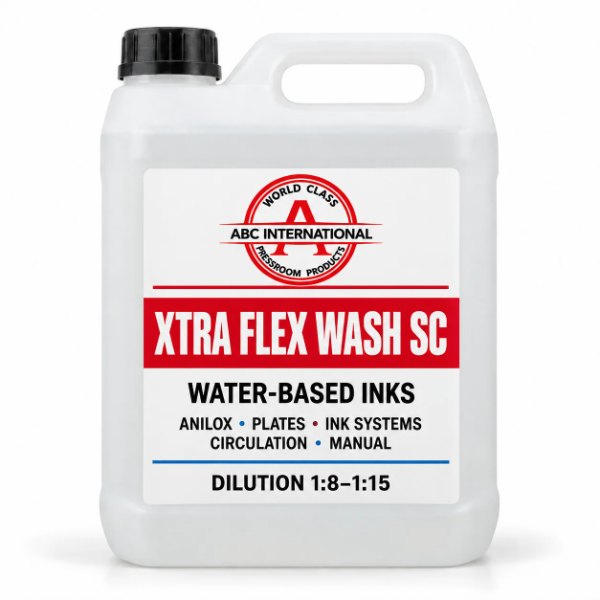
Water-based inks and coatings · methods below
Xtra Flex Wash SC
- Choose it when:
- you prefer an ABC International concentrate. For aluminium parts choose REMWASH AQUA SC.
- Suitable for:
- Water-based inks: anilox rollers and circuits; manual photopolymer cleaning. Water-based coatings: manual anilox cleaning.
- Dilution:
- 1:8–1:15 with water. Rinse thoroughly after cleaning.
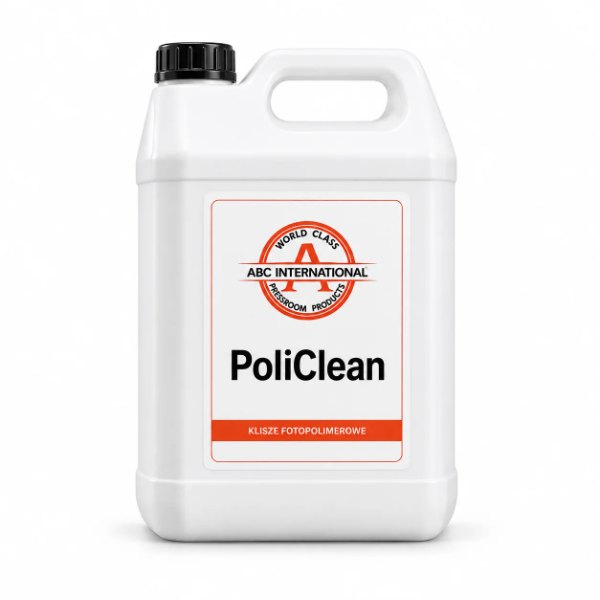
Photopolymer printing plates
PoliClean
- Choose it when:
- you clean plates after different ink types and want a ready-to-use, low-swell cleaner.
- Suitable for:
- Photopolymer plates after water-based, solvent-based and UV/EB inks; manual cleaning or a compatible plate washer.
- Preparation:
- Ready to use, no dilution. Rinse with water and check the relief.
- Action:
- The low-swell formulation helps protect the plate.
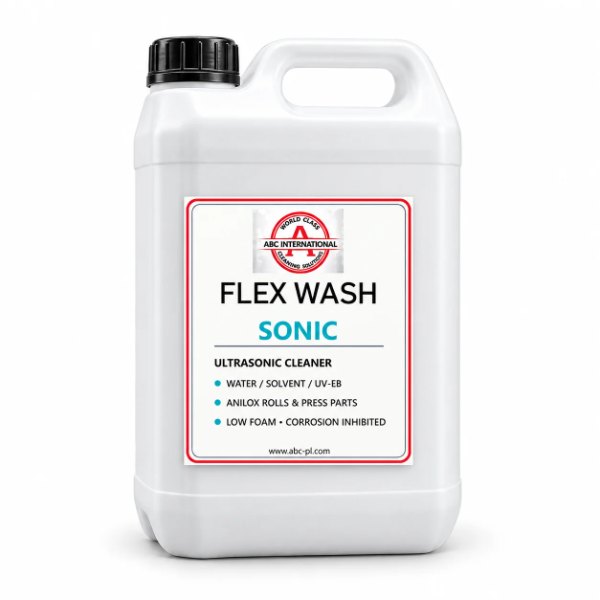
Anilox · ultrasonic cleaning
Flex Wash Sonic
- Choose it when:
- you clean anilox rolls in an ultrasonic washer.
- Suitable for:
- Ultrasonic anilox cleaning after water-based, solvent-based and UV/EB inks.
- Not for:
- Coatings.
- Preparation:
- Undiluted or up to 30% water. Set time and temperature for the washer and roller procedure.
Dilution ratios such as 1:8 mean one part concentrate to eight parts water. Confirm compatibility with the surface, seals and cleaning equipment before first use.
Selection, implementation and monitoring results
For ABC International chemicals, we work with the manufacturer to help select the product, carry out trials and implementation, and monitor the results in your production.
- Define the applicationTell us the component, ink or coating and the current problem. We will select the product and method.
- Test the performanceWe will send a test sample and agree what to assess after cleaning and which conditions to use.
- Assess the resultsWe compare component cleanliness, cleaning time and product consumption. For ABC products, we review the results with the manufacturer and help refine the method of use.
REMDRUK support · ABC chemical implementation in cooperation with ABC International
How do I choose a washer cleaner and prepare the bath?
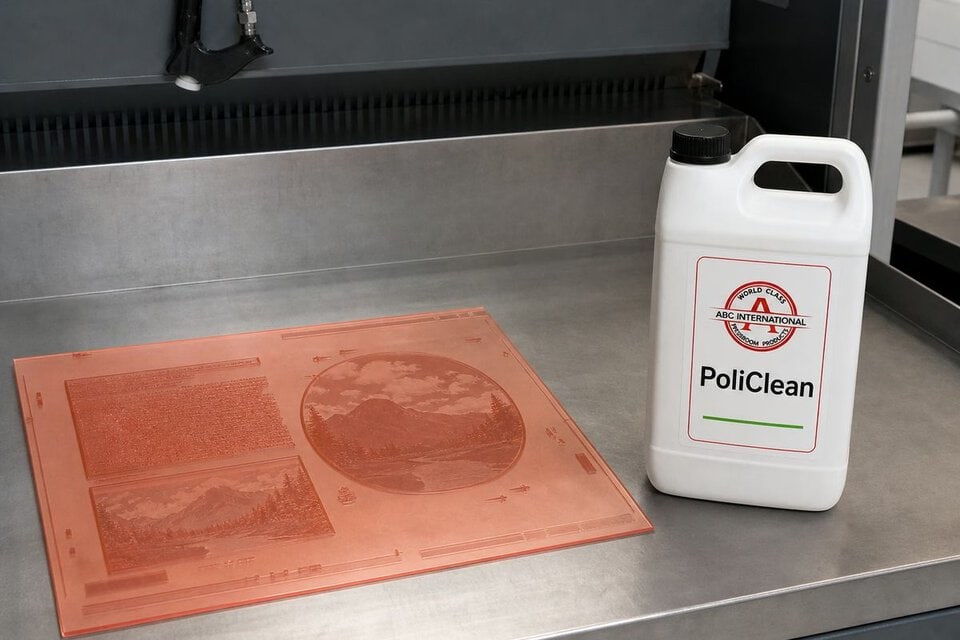
Photopolymer plate washer
PoliClean — removes water-based, solvent-based and UV/EB ink residues from photopolymer printing plates.
- Preparation: use undiluted in a compatible plate washer.
- After cleaning: rinse the plate with clean water, dry it and check the relief.
Water-based ink: REMWASH AQUA SC is another option. Use this concentrate in a plate washer at an optimum dilution of 1:8–1:12. It contains corrosion inhibitors and is safe for aluminium. Rinse and dry the plate after cleaning.
Ultrasonic anilox cleaner
Flex Wash Sonic — a low-foaming cleaner for anilox rollers after water-based, solvent-based and UV/EB inks.
- Preparation: use undiluted or with up to 30% clean water.
- Cycle settings: follow the cleaner, washer and anilox instructions for time and temperature.
Neutral pH; volatile organic compound (VOC) content: 0%.
Spray or pressure washer
| Residues | Product | Use |
|---|---|---|
| Solvent-based and alcohol-based inks | Flex Wash Solvent | Cleaning anilox rollers and sleeves outside the press. |
| UV / EB | Flex Wash UV | Automatic, circulation and pressure cleaning. Undiluted or with up to 20% water added. |
| Stubborn solvent-based, UV and EB ink deposits | Flexo Wash V | In spray or pressure washers; match the concentration and cycle to the equipment. Dilution by method → |
Before first use, check the washer instructions for compatibility with seals and materials in contact with the bath. For cycle selection, provide the washer model, ink type and component material.
Cleaning an anilox by hand? Choose a brush or micro sponge →
Full range and practical guidance
Open the topic relevant to your process. Product differences, restrictions and preparation remain available below.
What should I do if deposits or the previous colour remain?
The previous colour returns after a water-based ink change
If residues remain in the hoses, pump or chamber, the entire ink circuit needs cleaning. Xtra Flex Wash SC and REMWASH AQUA SC are used for manual and circulation cleaning after water-based inks; rinsing with water alone may leave binder and pigment behind.
What causes the problem, and what should you do?
Colour can return from areas with poor flow, the bottom of the tank or deposits around chamber seals. Assess the whole ink path during cleaning, as well as the cleanliness of the return liquid.
After the cycle, drain the system and rinse it thoroughly with clean water. For aluminium components, choose REMWASH AQUA SC — it contains a corrosion inhibitor. For water-based inks in a process with ISEGA, Dermatest and BG ETEM requirements, another option is Greenklean Acqua.
The anilox transfers less ink although the settings have not changed
When viscosity, temperature, flow and the doctor blade remain stable, dried deposits plugging the cells may be the cause. For manual deep cleaning after water-based inks, use Greenklean Acqua+, and after solvent-based and UV inks, use Greenklean Profondo.
How can you distinguish deposits from wear?
Deposits reduce the available cell volume. Cleaning removes deposits; it cannot rebuild chipped ceramic or damaged cell walls. After cleaning, compare the surface and print result under the same conditions. If cell-volume measurement is available, use it in the assessment.
For off-press cleaning in an ultrasonic unit, the appropriate option is Flex Wash Sonic. The method depends on the anilox and the available equipment; increasing impression pressure alone does not remove deposits from the cells.
A photopolymer plate remains dirty or softens after cleaning
Photopolymer reacts differently from a hard anilox surface, so an anilox cleaner is not automatically suitable for a printing plate. PoliClean is a ready-to-use product for manual and automatic cleaning of photopolymer plates; its low-swell formulation limits unwanted swelling.
What matters when cleaning a plate?
The ink type, the delay between printing and cleaning, and the cleaner’s contact with the photopolymer all matter. In a plate washer, brush condition and liquid cleanliness are also important. Deposits in the tank can contaminate a cleaned plate again.
PoliClean covers residues from water-based, solvent-based, UV and EB inks. Use it undiluted, then rinse the plate with clean water and dry it. Cleaning the inside of the washer itself is a separate maintenance task.
A sticky film remains after UV or EB ink
Flex Wash UVM — local manual cleaning only after UV and EB inks; not for circulation or automatic washers. Flex Wash UV — when you also clean the anilox, ink-delivery system and machine parts by circulation, automatically or by pressure.
Other cleaners after UV and EB inks
For circulation cleaning after solvent-based, UV and EB inks, use Flexo Wash V. For daily cleaning after solvent-based and UV inks, a ready-to-use option is Inklean Daily. EPDM rollers have a separate selection route — SHB UV Wash for uncured UV, LED-UV and H-UV inks.
Water-based coating in the circuit or on the anilox
REMWASH AQUA SC — cleaning anilox rollers, chambers and circuits, including aluminium.
Xtra Flex Wash SC — manual anilox cleaning after water-based coating.
REMWASH: dilution and application → · Xtra: dilution and application →
The quality department requires cleaner documentation
ISEGA concerns use in food-packaging production; Dermatest describes dermatological testing, while BG ETEM / Low Emission concerns emissions requirements. The documents answer different questions.
How do you match a document to the requirement?
First select a cleaner for the ink and cleaning method, then check its marks and certificates. Greenklean Acqua for routine cleaning after water-based inks and Greenklean Profondo for deep cleaning after solvent/UV inks have different applications despite a similar set of marks.
The table below shows the assignments for each product. A mark on a brand’s page does not mean all its products have the same certificates.
Aluminium becomes dull or changes colour after cleaning — which cleaner should you choose?
Stop using the current cleaner on this component. Check the concentration, contact time and temperature. For subsequent cleaning, select an aluminium-compatible product for the ink and type of deposit.
| Ink and task | Cleaner | Method and result |
|---|---|---|
| Water-based ink — routine cleaning | REMWASH AQUA SC or Greenklean Acqua | Manual or circulation cleaning: removes ink residues after production. REMWASH AQUA SC: 1:8–1:12, with corrosion inhibitors. Acqua: undiluted or diluted with water up to 1:10. Choose one cleaner and rinse the system thoroughly. |
| Dried water-based ink — deep cleaning | Greenklean Acqua+ | Manual use, undiluted. Removes deposits left after routine cleaning. Apply to the soiled area, then remove the deposits and cleaner residues. Do not use for circulation cleaning. |
| Solvent-based or UV ink — routine cleaning | Inklean Daily | Manual or circulation use, undiluted. Removes routine ink residues from cylinders, chambers, pumps and hoses. After the cycle, remove the contaminated liquid and cleaner residues. |
| Stubborn deposits from solvent-based or UV ink | Greenklean Profondo | Manual use, undiluted. For local removal of deposits left after routine cleaning. Work with a micro-sponge on a small area and thoroughly remove the residues. Do not use for circulation cleaning. |
Water-based coating: for routine manual or circulation cleaning involving aluminium, use REMWASH AQUA SC at 1:8–1:12. Rinse thoroughly afterwards.
Compatibility with aluminium does not automatically cover anodising, other surface coatings or every seal material. Check all wetted materials. Changing the cleaner will not reverse existing surface damage.
Need a cleaner for a specific component? Send a photo, the ink type and the cleaner currently used →
The ultrasonic bath foams or cleans the anilox less effectively
Check the deposit load in the bath, cycle conditions, anilox positioning and equipment operation. Extending the cycle does not replace bath maintenance. This method is supported by low-foaming Flex Wash Sonic; it can be used undiluted or with up to 30% water.
Flexo Wash V can also be used in an unheated ultrasonic washer at a 1:3 dilution. Do not transfer these parameters between products.
Ink transfer does not recover after cleaning the anilox
If the deposits have been removed and process settings are correct, check for wear, scratches, chips and damaged cell walls. Another cleaner cannot repair damaged geometry. At this point, the roll or sleeve needs assessment beyond cleaning.
Compare cleaners by ink and cleaning method
Choose the component and type of residue. Routine cleaning removes residues after printing; deep cleaning removes deposits left after normal washing. Select a product name to prepare an enquiry to REMDRUK.
| What do you want to clean? | Cleaner | Application and benefit |
|---|---|---|
| Anilox, ink circuit and manually cleaned plate after water-based ink | Xtra Flex Wash SC | Cleans anilox rollers and ink circuits, and photopolymer plates manually after water-based inks. Dilute the concentrate 1:8–1:15 with water. |
| Anilox, circuit and coating unit after water-based ink or coating; plate after water-based ink | REMWASH AQUA SC | Manual and circulation cleaning of anilox rollers, chambers, pumps and hoses in inking and coating systems, plus photopolymer plates manually or in a plate washer. Optimum dilution: 1:8–1:12. Contains corrosion inhibitors; safe for aluminium. Rinse thoroughly after cleaning. Dilution and use → |
| Routine water-based ink cleaning, including aluminium components | Greenklean Acqua | For routine manual and circulation cleaning. Compatible with aluminium; use undiluted or dilute with water up to 1:10. Rinse the system after cleaning. |
| Dried water-based ink in anilox cells | Greenklean Acqua+ | Removes deposits left after routine washing. For manual anilox deep cleaning; ready to use without dilution. |
| Routine cleaning after solvent-based and UV inks | Inklean Daily | Ready-to-use cleaner for removing ink residues manually or by circulation. No working solution needs to be mixed. |
| Solvent-based, UV and EB inks — several cleaning methods | Flexo Wash V | For solvent-based, UV and EB inks: manual, circulation, unheated ultrasonic, spray and pressure cleaning. Dilution by method → |
| Stubborn solvent-based or UV ink deposits in anilox cells | Greenklean Profondo | For manual removal of deposits left after routine washing. Ready to use; apply to the affected surface and clean with a micro sponge. |
| Manual anilox and press-component cleaning after UV/EB inks | Flex Wash UVM | Removes UV and EB ink residues during local manual cleaning. Do not use in a circulation circuit or automatic washer. |
| UV and EB inks — manual and machine cleaning | Flex Wash UV | For cleaning anilox rollers, ink-delivery systems and machine parts after UV and EB inks. Use manually, by circulation, in automatic systems or by pressure cleaning — undiluted or with up to 20% water added. |
| Anilox in an ultrasonic cleaner | Flex Wash Sonic | Low-foaming cleaner for removing water-based, solvent-based, UV and EB inks from anilox rollers using ultrasonics. Use undiluted or with up to 30% water. Not for coatings. |
| Photopolymer printing plate | PoliClean | Removes ink manually or in a plate washer; the formulation limits photopolymer swelling. Use undiluted, then rinse and dry the plate. |
| EPDM roller after uncured UV, LED-UV or H-UV ink | SHB UV Wash | Removes uncured ink from compatible rollers and blankets, including EPDM. For manual cleaning or a compatible washing system. |
| Stubborn water-based, solvent-based and UV ink deposits — no aluminium contact | Inklean Universale | Deep manual cleaning, undiluted. Alkaline gel removes deposits left after routine cleaning. Do not use on aluminium, including exposed ends and cores. Control contact time and rinse thoroughly. Not for circulation or automatic washing. |
Xtra Flex Wash SC and REMWASH AQUA SC: dilution and use
Circulation cleaning must remove ink from the hoses, pump and chamber as well as the anilox. A concentrate lets you prepare the amount of solution required by the installation. Select the dilution from that product’s own instructions.
Xtra Flex Wash SC
What does it clean? Fresh water-based ink residues. Anilox rollers and ink circuits: manual or circulation cleaning of compatible components. Photopolymer plates: manual cleaning after water-based inks; this application does not extend to plate washers.
How to use: dilute 1:8–1:15 with water. Remove the dirty solution and rinse as directed for the component; after circulation cleaning, rinse the entire circuit. The aim is to remove fresh ink before it dries and contaminates the next colour. Dried deposits require a separate deep-cleaning method.
Water-based coating: use Xtra Flex Wash SC for manual anilox cleaning. Choose REMWASH AQUA SC for the coating circuit.
Ask about this productXtra Flex Wash SC pack sizes and offer →
Concentrate · REMDRUK brand
REMWASH AQUA SC
A concentrate for removing water-based ink and coating residues from anilox rolls and ink or coating circuits, using manual cleaning or recirculation in a closed system. Clean photopolymer plates after water-based inks manually or in a plate washer.
Looking for ready-to-use REMWASH AQUA? →
Corrosion inhibitors and aluminium: the cleaner is safe for aluminium, and its corrosion inhibitors help protect metal components during cleaning. Remove the used solution and rinse the surface or entire circuit thoroughly with clean water. The inhibitor does not replace rinsing.
Optimum dilution: 1:8–1:12 — one part concentrate to eight to twelve parts water.
For less demanding soiling: you can trial 1:15 or even 1:20. Assess the cleaning result under your operating conditions before adopting this dilution for routine use.
Pack sizes: 20, 200 and 1000 L. Minimum order: 20 L.
When should you consider Greenklean Acqua? When aluminium compatibility and ISEGA, Dermatest and BG ETEM / Low Emission documentation matter alongside daily cleaning after water-based inks. It also supports manual and circulation cleaning; use it undiluted or diluted with water up to 1:10. Compare it with Acqua+ for dried deposits.
How much working solution from 20 litres of concentrate?
| Product | Ratio | Concentrate | Water | Solution |
|---|---|---|---|---|
| REMWASH AQUA SC | 1:8 | 20 l | 160 l | 180 l |
| REMWASH AQUA SC | 1:12 | 20 l | 240 l | 260 l |
| Xtra Flex Wash SC | 1:8 | 20 l | 160 l | 180 l |
| Xtra Flex Wash SC | 1:15 | 20 l | 300 l | 320 l |
These are prepared solution volumes, not numbers of wash cycles. Consumption depends on contamination, application and bath replacement.
Which CBG cleaner is for routine washing and which is for deposits?
| Residues | Routine cleaning | Manual deep cleaning |
|---|---|---|
| Water-based inks | Greenklean Acqua | Greenklean Acqua+ |
| Solvent-based and UV inks | Inklean Daily | Greenklean Profondo |
Daily circulation cleaning and removing dried deposits from an anilox call for different approaches. Start with the ink type, then select the method and check the component material. Certificates help assess additional requirements for packaging production, skin contact and emissions.
| Cleaner | Ink residues | Task | Method | Form | Aluminium* |
|---|---|---|---|---|---|
| Greenklean Acqua | Water-based | Daily cleaning | Manual or circulation | Concentrate | Compatible |
| Inklean Daily | Solvent-based and UV | Daily cleaning | Manual or circulation | Ready to use | Compatible |
| Greenklean Profondo | Solvent-based and UV | Deep cleaning | Manual | Ready to use | Compatible |
| Greenklean Acqua+ | Water-based | Deep cleaning | Manual | Ready to use | Compatible |
| Inklean Universale | Water-based, solvent-based and UV | Deep cleaning | Manual | Ready to use | Do not use |
*Aluminium compatibility does not automatically cover every seal and coating. Check all materials that will come into contact with the cleaner.
Greenklean Acqua: clean the entire ink path
After a colour change, ink residues can remain in the pump, hoses and doctor-blade chamber. Acqua is intended for daily manual and circulation cleaning, helping clean the entire ink flow path. Use the concentrate undiluted or diluted with water up to 1:10. Rinse the installation thoroughly after the cycle.
Ask about this productGreenklean Acqua pack sizes and offer in the shop →
Inklean Daily: consistent cleaning without dilution
Daily meets the need for regular cleaning after solvent-based and UV inks. It is ready to use, so no solution preparation is required. It supports daily manual and circulation cleaning of cylinders, chambers and the ink path. Persistent deposits may require a separate deep-cleaning step.
Ask about this productView Inklean Daily and request a quote →
Greenklean Profondo: work directly on the deposits
If deposits remain on the anilox after routine washing, Profondo is intended for deep manual cleaning. Apply the ready-to-use product with a sponge to the surface requiring further cleaning. Its neutral pH and aluminium compatibility are relevant selection criteria; they do not remove the need for operator protection.
Ask about this productView Greenklean Profondo in the shop →
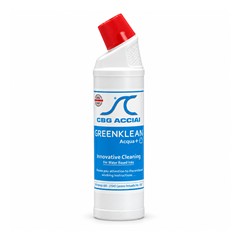
Greenklean Acqua+: for dried water-based ink
Choose Acqua+ for deep manual cleaning after water-based inks. It is ready to use and intended for work on a particular contaminated component. It differs from Acqua in both form and purpose: the plus sign does not mean a concentrate for stronger flushing of the entire circuit.
Ask about this productView Greenklean Acqua+ for deep cleaning →
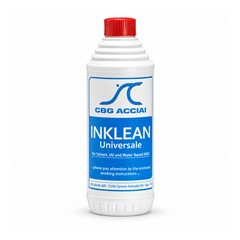
Inklean Universale: a broad ink range with an important material restriction
Universale is intended for deep manual cleaning after water-based, solvent-based and UV inks. It is an alkaline cleaner for controlled application to stubborn deposits. Do not use it on aluminium, including exposed cores and roller ends. Its broad ink range does not make it a substitute for a recirculation cleaner or a product suitable for every component.
ISEGA, Dermatest and Low Emission marks are not confirmed for this cleaner. If your process requires them, select a product with the relevant documentation.
Ask about this productExplore Inklean Universale applications →
How do Flex Wash UV, UVM, Flexo Wash V and SHB UV Wash differ?
Flex Wash UV / Flex Wash UVM
Flex Wash UV: anilox rollers, ink-delivery systems and machine parts after UV and EB inks — manual, circulation, automatic or pressure cleaning. Undiluted or with up to 20% water added; this limit also applies to automatic and pressure cleaning.
Flex Wash UVM: local manual cleaning only after UV and EB inks; do not add it to a circulation system or automatic washer.
Flexo Wash V for stubborn deposits
For removing accumulated pigment and solvent-based, UV and EB ink residues from anilox rollers and suitable system components.
Manual cleaning: dilute 1:3–1:6 with water. Unheated ultrasonic bath: 1:3. Also used in circulation systems and spray or pressure washers. Remove the contaminated liquid and rinse the component afterwards.
For spray or pressure washing, provide the washer model, ink type and anilox material so we can select the concentration and cycle.
SHB UV Wash for rubber
Cleaning EPDM or polyurethane requires a product intended for those surfaces. SHB UV Wash covers rollers, blankets and compatible components after uncured UV, LED-UV and H-UV inks; it supports manual cleaning and washing systems.
How and when should I clean an anilox manually?
An anilox in production needs daily cleaning. Remove ink after each job or shift and before any interruption that could allow it to dry. If you run several jobs, once a day may be too infrequent. Routine washing limits deposit build-up and helps maintain consistent ink transfer.
Routine washing removes residues left by production. Deep cleaning of the cells is needed when deposits remain after routine washing or measurements show a loss of usable cell volume. The interval depends on the ink, the roll’s workload and the print requirements. A fixed rule such as “deep clean once a week” cannot replace an assessment of the cells.
Choose a brush for ceramic, chrome or a printing plate →
How to clean an anilox manually
- Stop and secure the press. Prepare access to the anilox according to the press manufacturer’s instructions and prevent unintended movement. Check the condition of the surface and the cleaning tool.
- Match the cleaner to the ink and the roll’s construction. Consider the ceramic or chrome surface, the core material and any components exposed to the liquid. Use the concentration, temperature and contact time specified for the selected product.
- Keep the surface wet while cleaning. Apply the cleaner with a suitable sponge. Where the instructions permit brushing, use the specified tool and controlled movements. The cleaner and tool work together; do not allow the cleaner to dry on the surface.
- Remove dissolved ink and cleaning residues. Rinse or replace a dirty tool to avoid spreading deposits back onto the surface. Rinse using the procedure appropriate to the cleaner and roller, then dry with a clean, soft cloth.
- Check the result. If cells remain plugged, use an approved deep-cleaning procedure. Do not compensate for an ineffective cleaner by scrubbing progressively harder. Inspection under magnification helps distinguish remaining deposits from surface damage.
Micro sponges with Greenklean Profondo or Acqua+ — cleaning procedure
- Apply the cleaner to a micro sponge, spread it over the anilox and clean the surface with the wet sponge.
- Wait 3–5 minutes and repeat the cleaning.
- Rinse the sponge in clean water and wipe the surface to remove the cleaner and dissolved ink.
- Dry the anilox thoroughly with a soft, lint-free cloth.
The 3–5-minute contact time applies to Greenklean Profondo and Acqua+ with this method. For another cleaner, use its own contact-time conditions.
Which brush should I choose for ceramic, chrome or a plate?
Start with the working surface and the type of deposit. Choose the cleaner for the ink and the roll or plate materials; then select the brush or sponge.
Choose the bristles for the working surface
| What are you cleaning? | Choose the tool | Use and result |
|---|---|---|
| Ceramic anilox | Stainless steel brush | For manual cleaning with a suitable liquid: it helps loosen and remove softened ink deposits. Choose a dedicated anilox brush; do not use an ordinary steel wire brush. |
| Chrome-plated anilox | Brass brush | For manual cleaning where brass bristles are permitted. Keep the surface wet with the appropriate cleaner. Do not use the stainless steel brush intended for ceramic rolls. |
| Photopolymer or rubber printing plate | Soft nylon brush / horsehair brush | For removing ink from the plate and relief. Horsehair is the softer option for fine detail. Match the bristle stiffness and cleaner to the plate; these are not the default choice for deep cleaning blocked anilox cells. |
| Ceramic or chrome-plated anilox — sponge cleaning | Micro sponges | For applying the cleaner and removing softened ink. Useful for routine cleaning and local deep cleaning with the appropriate product. |
| Ceramic anilox — 0.127 mm wire option | Stainless steel brush in a wooden block | 0.127 mm stainless steel bristles for manual cleaning with the appropriate liquid. Match the wire diameter to the engraving; do not use on chrome. |
Need help choosing or a test sample? Contact REMDRUK →
Check the permitted cleaning method for the roller or plate. Use the brush with a suitable cleaner on a wet surface, without excessive pressure. The core and other wetted parts also matter when selecting the chemical.
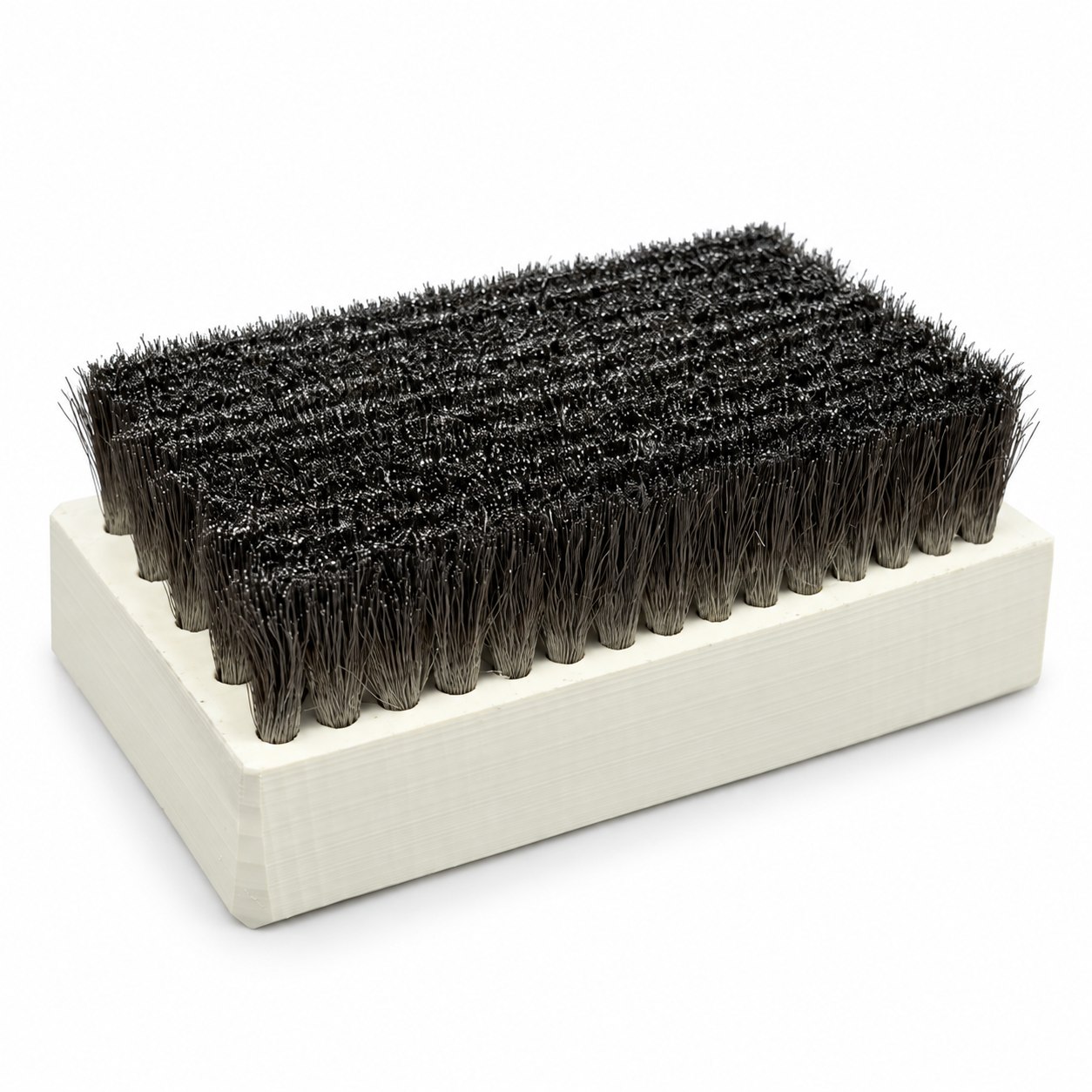
CBG stainless steel brush for ceramic anilox rolls
Choose for: manual washing and deep cleaning of ceramic anilox and coating rolls. It helps remove deposits softened by a cleaner selected for water-based, solvent-based or UV ink.
Important: for ceramic surfaces only, where brushing is permitted. Do not use on chrome, rubber or photopolymer plates. Sold individually.
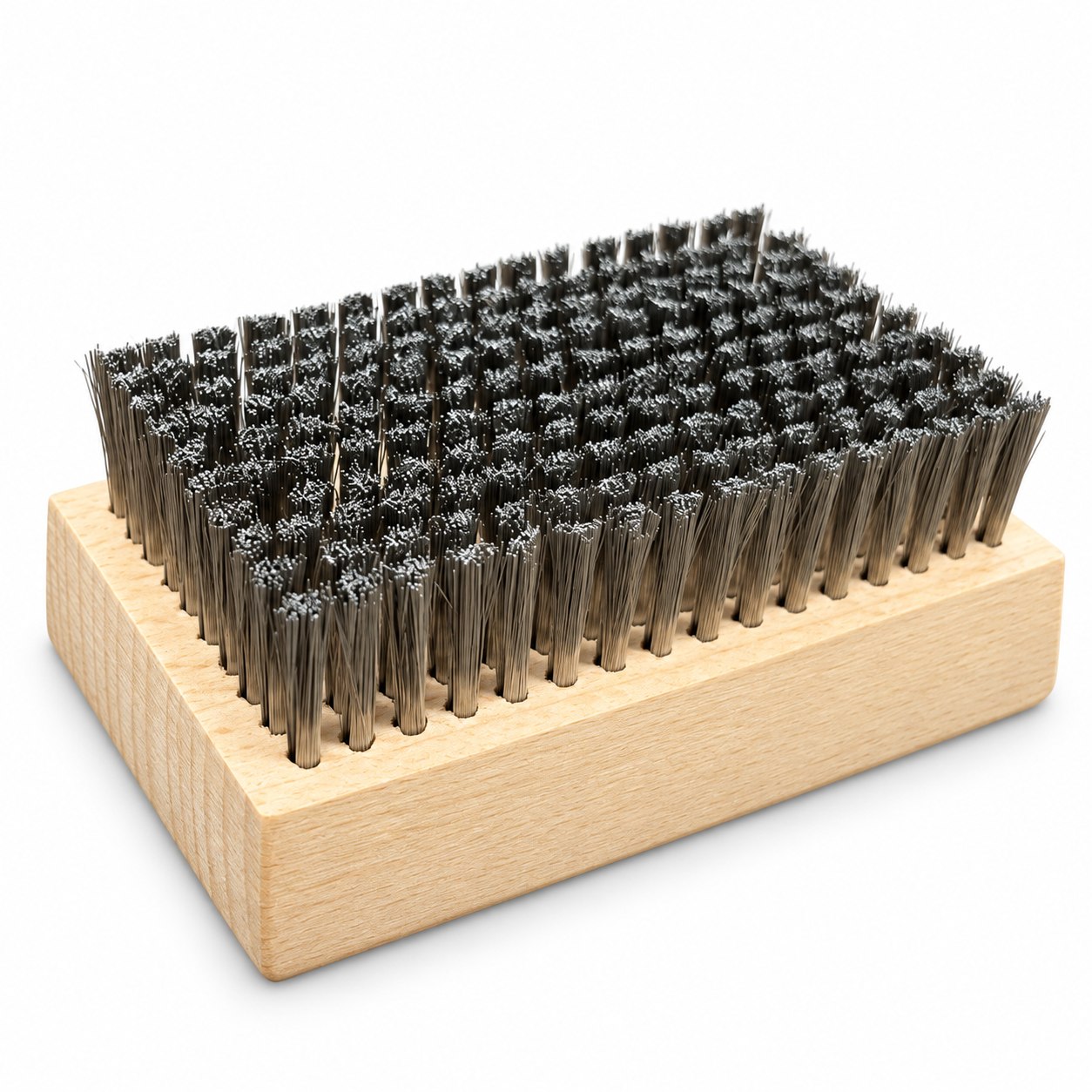
Stainless steel brush in a wooden block — 0.127 mm
Choose for: manual cleaning of ceramic anilox rolls. The wooden block holds 0.127 mm stainless steel bristles, used with a suitable cleaner to help remove ink deposits.
Selection: match this wire diameter to the engraving and permitted cleaning method. It does not mean that each bristle reaches the bottom of every cell. Do not use on chrome-plated rolls, rubber or photopolymer plates; keep the surface wet and avoid excessive pressure.
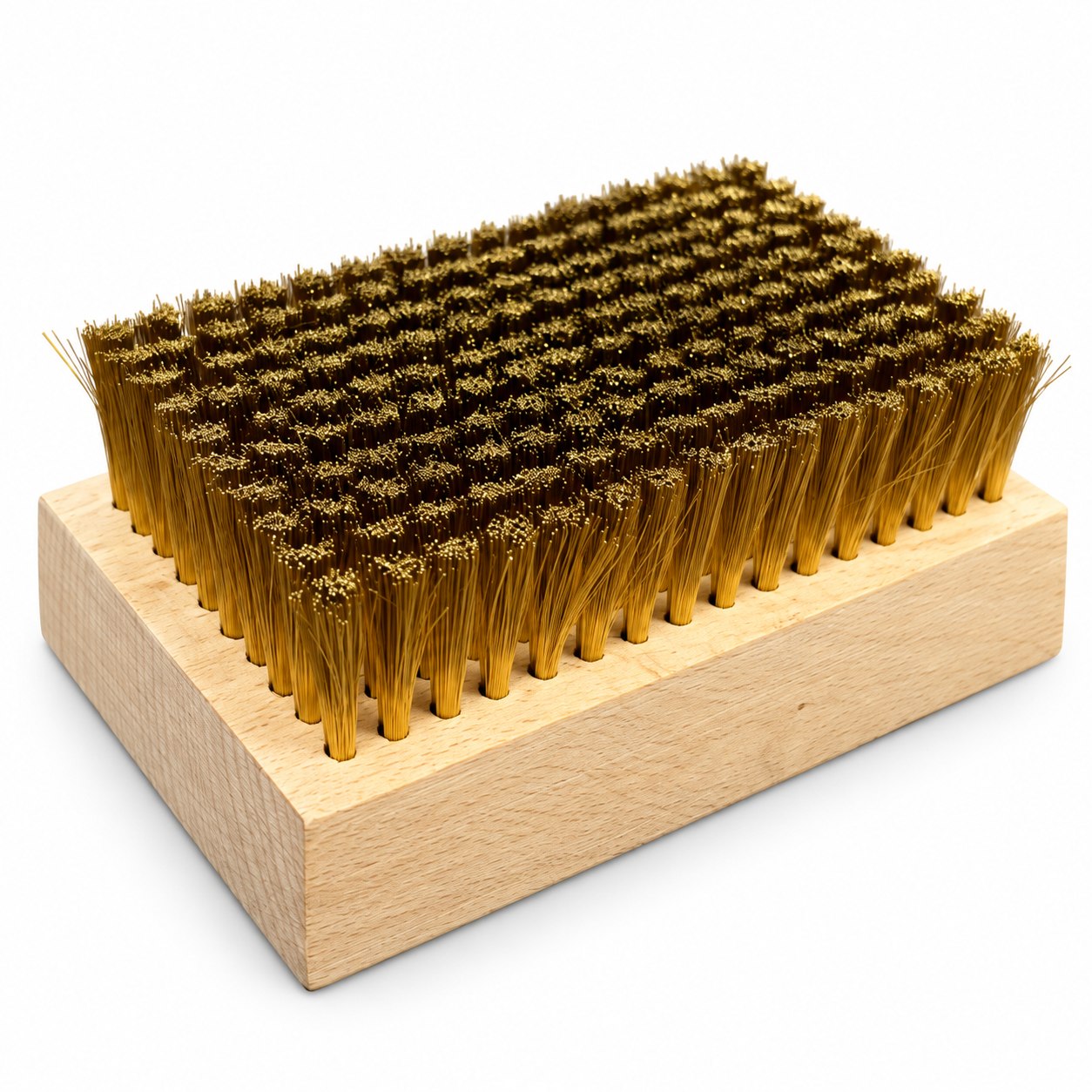
Brass brush for chrome-plated anilox rolls
Clean: chrome-plated metal anilox and gravure cylinders where brass bristles are permitted.
Result: the brass bristles help loosen and remove ink deposits softened by the cleaner.
How to use: wet the surface with a compatible cleaner, brush evenly without heavy pressure, then remove the dirty liquid. Rinse as required for the product and dry the cylinder. Keep the cleaner from drying on the surface.
For ceramic anilox rolls: choose a dedicated stainless steel brush matched to the engraving.
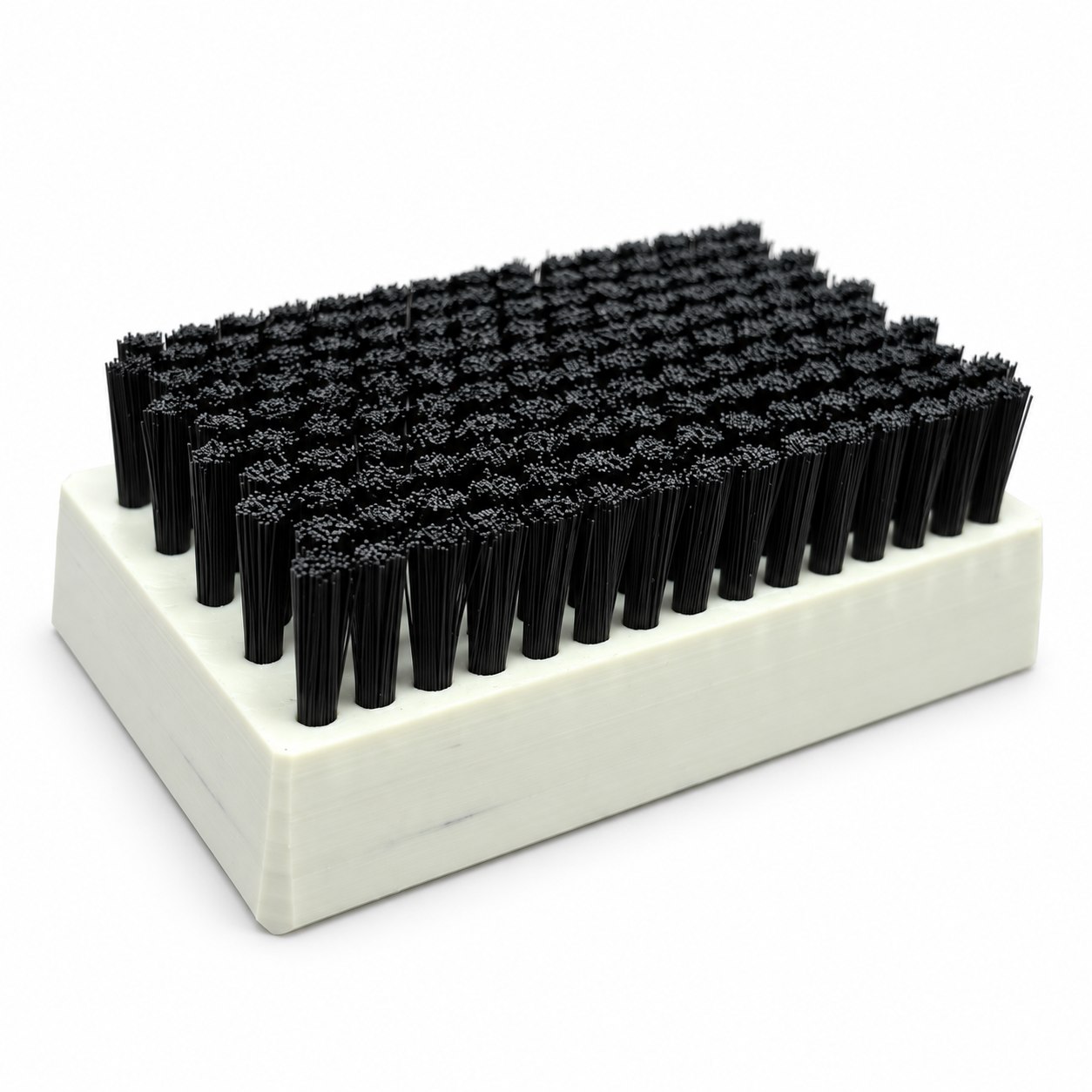
CBG nylon brush for manual cleaning
Choose for: routine removal of ink from photopolymer and rubber printing plates, using a soft brush matched to the plate. For very fine detail, compare the horsehair option.
For anilox rolls: nylon alone does not establish compatibility. Bristle stiffness, diameter and the roll’s permitted cleaning method must match. Do not select this model for an anilox solely because it has non-metallic bristles.
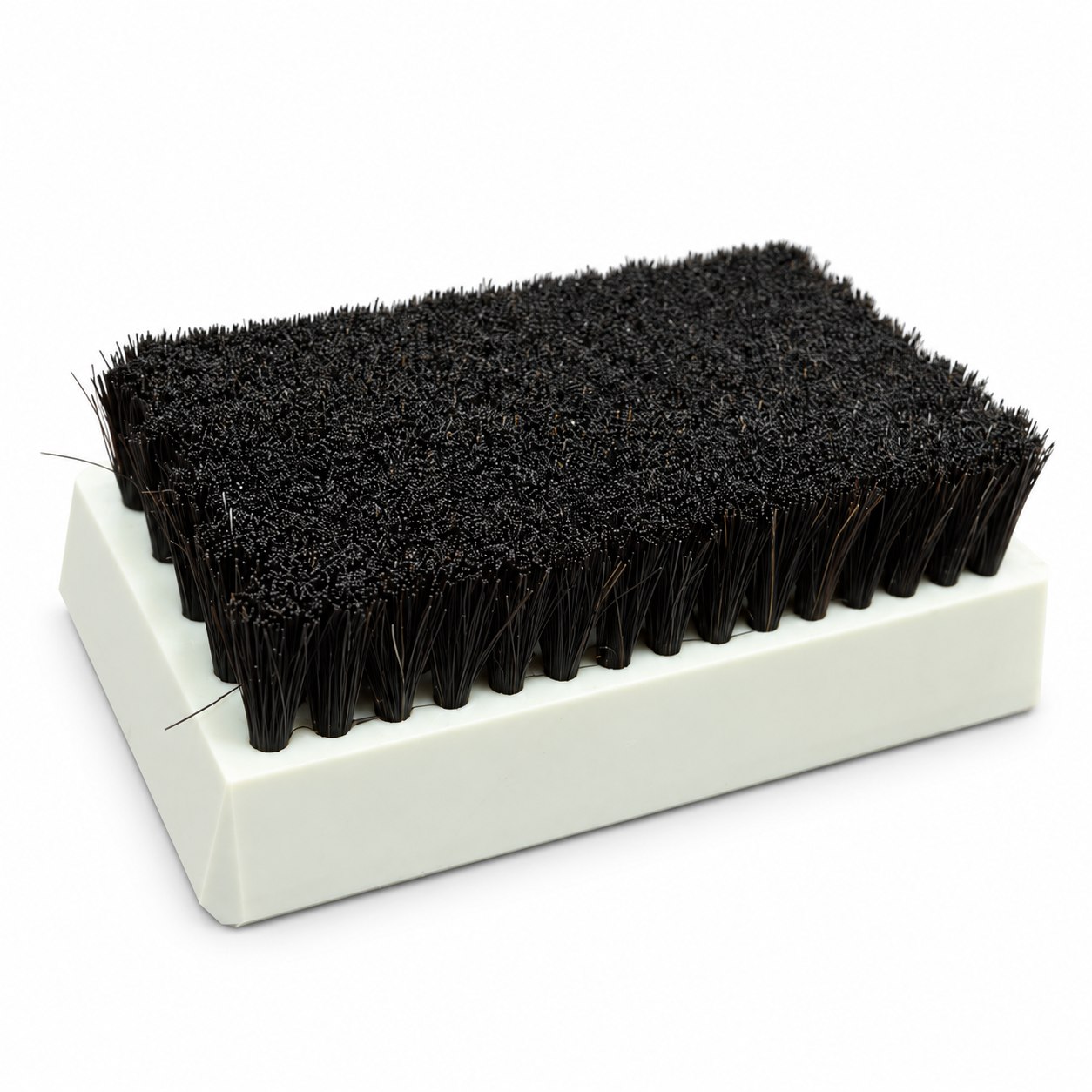
CBG horsehair brush
Choose when: gentle cleaning and spreading the cleaner are the priority. Soft horsehair brushes are used for applications including photopolymer and rubber plates, particularly those with fine image detail.
Important: follow the instructions for the specific plate or roll. A soft brush does not replace deep cleaning of dried deposits in anilox cells. Use a suitable cleaner rather than scrubbing dry.
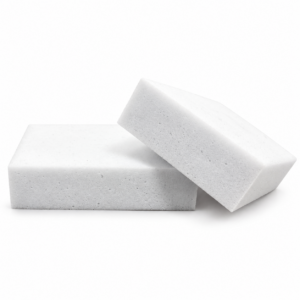
CBG micro sponges for cylinder cleaning — 50 pcs
Choose for: applying cleaner, routine washing and deep cleaning of cylinders — including ceramic and chrome-plated surfaces — after water-based, solvent-based and UV inks.
Select the cleaner too: it must suit the ink and the roll materials. The sponge does not replace correct chemical selection. Pack size: 50 pieces.
Which cleaners have ISEGA, Dermatest or BG ETEM documentation?
All certificates for the products we offer are available on request. Provide the product name to receive the relevant document and scope of application. Request certificates →
Compare products with ISEGA, Dermatest and BG ETEM Low Emission documentation. Find out which assessment covers which cleaner and request the documents needed by purchasing, quality or health and safety.
ISEGA
ISEGA documentation helps assess a cleaner’s use on machinery involved in food-packaging production. It gives the quality department a specific basis for qualifying the product and describes its limits of use.
Practical significance: cleaner selection goes together with controlling residue removal. This is not a general approval for direct food contact or a certificate for the finished packaging.
Dermatest
Greenklean Acqua and Profondo received a “very good” rating in dermatological testing. No toxic-irritant intolerance reactions were observed in the open patch test.
Practical significance: this information helps compare products that operators work with. It concerns the skin-test conditions, not every route of exposure.
BG ETEM Low Emission
The mark concerns limited solvent emissions and assessment of composition against the BG ETEM industry initiative criteria. The approval covers Greenklean Acqua and Profondo.
Practical significance: it helps identify a cleaner with a documented emissions assessment. It does not mean zero emissions, complete absence of hazards or confirmed biodegradability.
| Product | ISEGA | Dermatest | Low Emission | Main application |
|---|---|---|---|---|
| Greenklean Acqua | Yes | Yes | Yes | Routine washing after water-based inks |
| Greenklean Profondo | Yes | Yes | Yes | Deep cleaning after solvent-based and UV inks |
| Greenklean Acqua+ | Yes | Not confirmed | Not confirmed | Deep cleaning after water-based inks |
| Inklean Daily | Yes | Not confirmed | Declared property | Routine washing after solvent-based and UV inks |
| Inklean Universale | Not confirmed | Not confirmed | Not confirmed | Deep manual cleaning; not for aluminium |
How should you read these confirmations? The scope applies to a specific product and formulation. Dermatest does not replace protection required by the safety data sheet. Low Emission does not establish compatibility with every press material. Removing cleaning residues also matters in packaging production. For Inklean Daily, Low Emission is a declared product property, not a confirmed BG ETEM approval.
View the CBG 2023 catalogue · Meaning of the mark according to BG ETEM · Dermatest institute explanations
Questions about the documents
Does ISEGA mean the cleaner can be left on the press after washing?
No. An assessment for use in packaging production does not replace cleaning and residue-removal procedures. Read the document’s scope together with the product instructions and process requirements.
Does a positive Dermatest result allow work without gloves and goggles?
No. The result concerns skin testing. Select hand and eye protection and other protective equipment according to the safety data sheet and working conditions; a skin assessment does not establish an absence of eye irritation.
Anilox condition and cleaning results
Anilox inspection with the 3D Troika EVO-M microscope
Ink transfer remains uneven after cleaning? Check the cells before choosing another deep-cleaning treatment. The inspection helps assess whether the issue is remaining deposits, wear or surface damage.
- We measure: cell volume, line screen and engraving parameters.
- We assess: contamination, wear and damage to the anilox surface.
- You receive: an image with the cell-volume measurement and an assessment of the anilox condition.
Inspection at your premises or at REMDRUK. Measurement is free of charge for customers who purchased anilox rolls or sleeves from REMDRUK. We also offer paid anilox audits, quoted individually according to the number of anilox rolls or sleeves. We agree the date and arrangements individually.
Questions about anilox cleaning in flexographic printing
Does a flexographic anilox need cleaning at least once a day?
Yes — on days when it is used, cleaning is part of the daily routine. Remove ink after each job or shift and before an interruption that could let it dry. With several jobs or colour changes, a single wash at the end of the day may be too infrequent.
Does daily washing mean deep cleaning the anilox every day?
Routine washing removes production residues. Deep cleaning removes deposits left in the cells after a normal cycle. Cell cleanliness, usable volume and print requirements determine when deep cleaning is needed. It does not replace daily washing.
Why does harder brushing not always improve the result?
With fine cells, bristles may be wider than the openings. The tool assists the liquid; greater pressure does not guarantee clean cell bottoms and can damage the surface. If deposits remain, select an approved deep-cleaning method and inspect the anilox under magnification.
Product selection and quotation
Need help choosing a cleaner, product documentation or a quotation? Send as much of the information listed below as you have. If the material or method is unknown, tell us — a photograph can help identify the next step.
For product selection
- Component and material: roller, plate, blanket or circuit.
- Ink or coating type, deposit and current cleaning method.
- Press or washer model; a photograph if available.
For a quotation
- Product name and variant, or the intended application.
- Required quantity and preferred pack size, if known.
- Delivery location and required date.
Technical and quality documentation: ask for the technical data sheet (TDS), safety data sheet (SDS) or confirmation required for a specific product and application. Availability, pack sizes and delivery terms are confirmed in the quotation.
Product catalogue in the shop →
REMDRUK · More than cleaning chemicals
Rollers and sleeves for flexo — refurbishment and new supply
Cleaning removes deposits, but it cannot repair cracks, a worn cover or damaged geometry. If print quality does not recover after correct cleaning, have the roller or sleeve inspected. We can help determine whether refurbishment or a new component is needed.
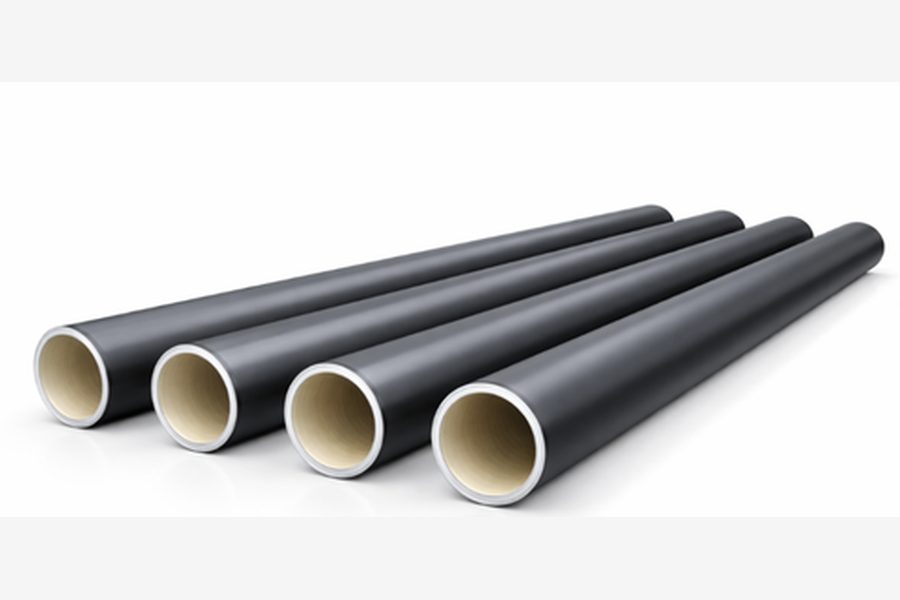
Anilox rollers and sleeves
Refurbishment and new anilox supply, with specifications matched to the ink, coating or adhesive.
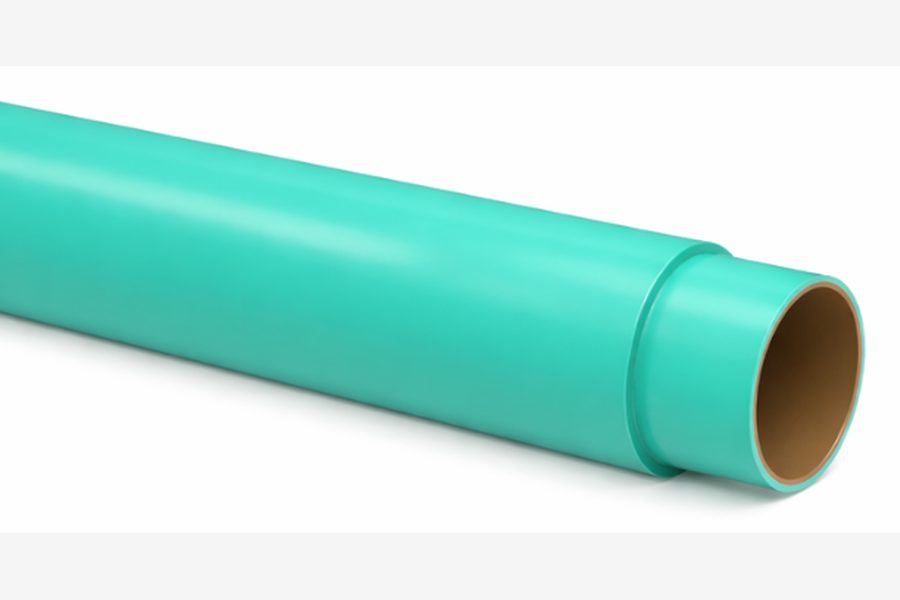
Rubber-covered sleeves for printing and laminating
Refurbishment and new sleeves, with compound, hardness and surface finish selected for the process.
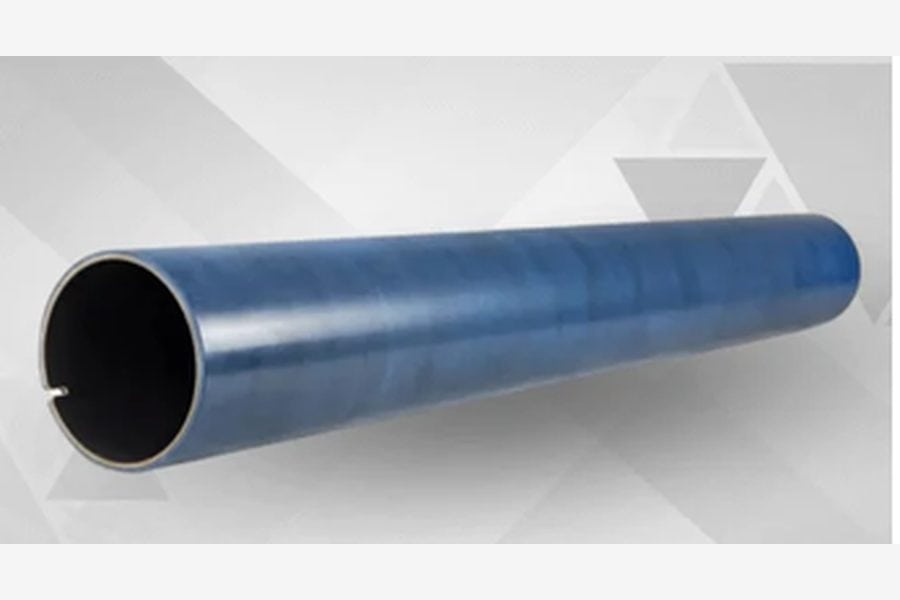
Plate mounting sleeves
New flexographic plate mounting sleeves matched to the press, diameter and working width.
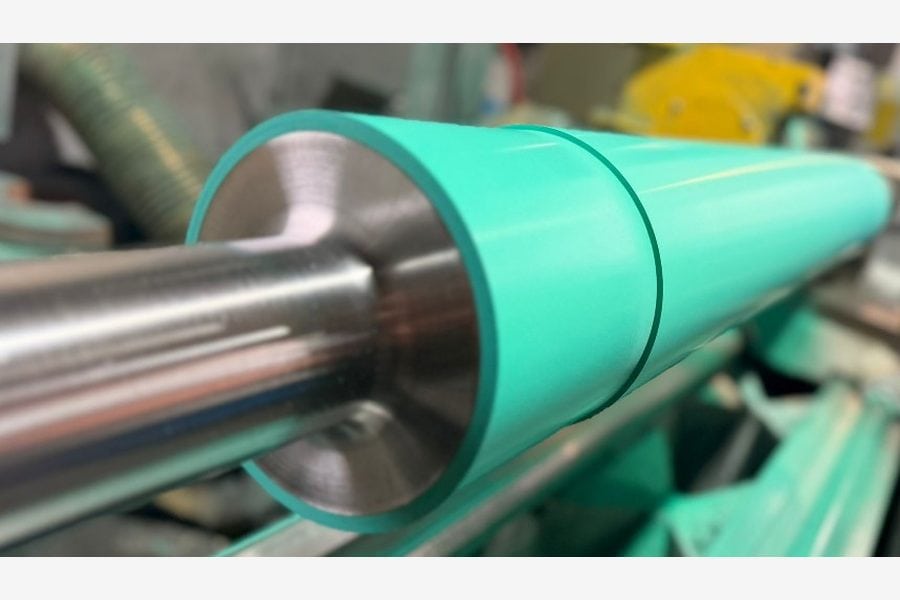
Rubber rollers for flexographic presses and laminators
Recovering, precision grinding to the required diameter and profile, and new roller manufacture.
For a quotation, send the press model, component dimensions or drawing, photos and a description of the problem.
For corrugated packaging producers
Rollers and anilox rolls for corrugated packaging producers
Beyond cleaning chemicals, we refurbish and supply new rubber and polyurethane rollers, and offer anilox rolls for printing units and corrugators. Cleaning, condition checks and roller replacement for your line — from one supplier.
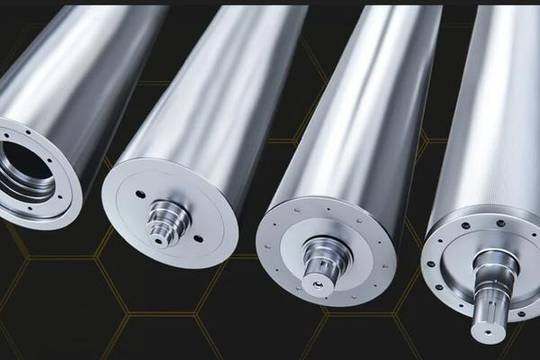
Anilox rolls for printing and corrugators
REMDRUK offers ceramic anilox rolls for flexo printing units and anilox glue rolls for corrugator glue units — new or refurbished. Before you decide, we can check the anilox condition with a 3D microscope.
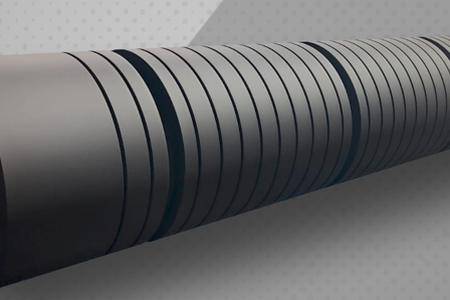
Rubber rollers for printers and feeders
Refurbishment and new rubber rollers for printing units and corrugated sheet feeders, including grooved rollers.
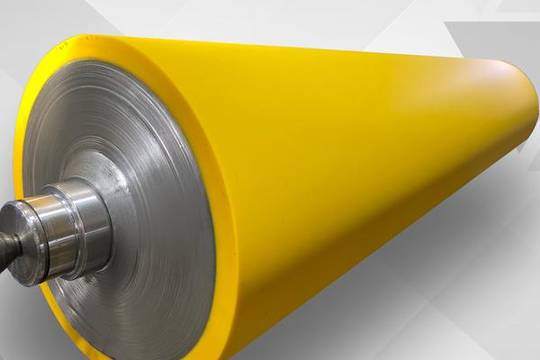
Polyurethane rollers for die cutters
Cover refurbishment and new polyurethane-covered rollers for die cutters. Send the machine model and roller dimensions and we will select the cover hardness.
For an enquiry, send the machine model, roller type and dimensions or a drawing, photos, and whether you need a new roller or refurbishment.
Ask about rollers for your corrugated line → See our packaging industry offer →